Why Do Golf Shots Balloon?
Ballooning golf shots climb steeply, stall and drop short. The usual causes are excess spin and launch — here is what creates them and how to fix it.
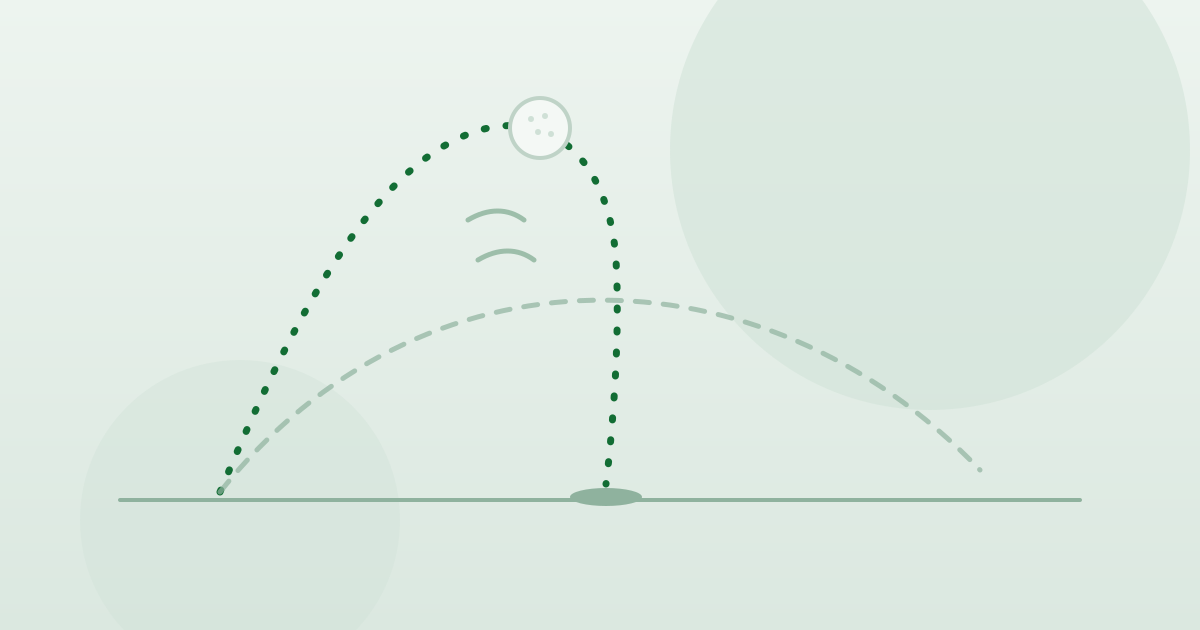
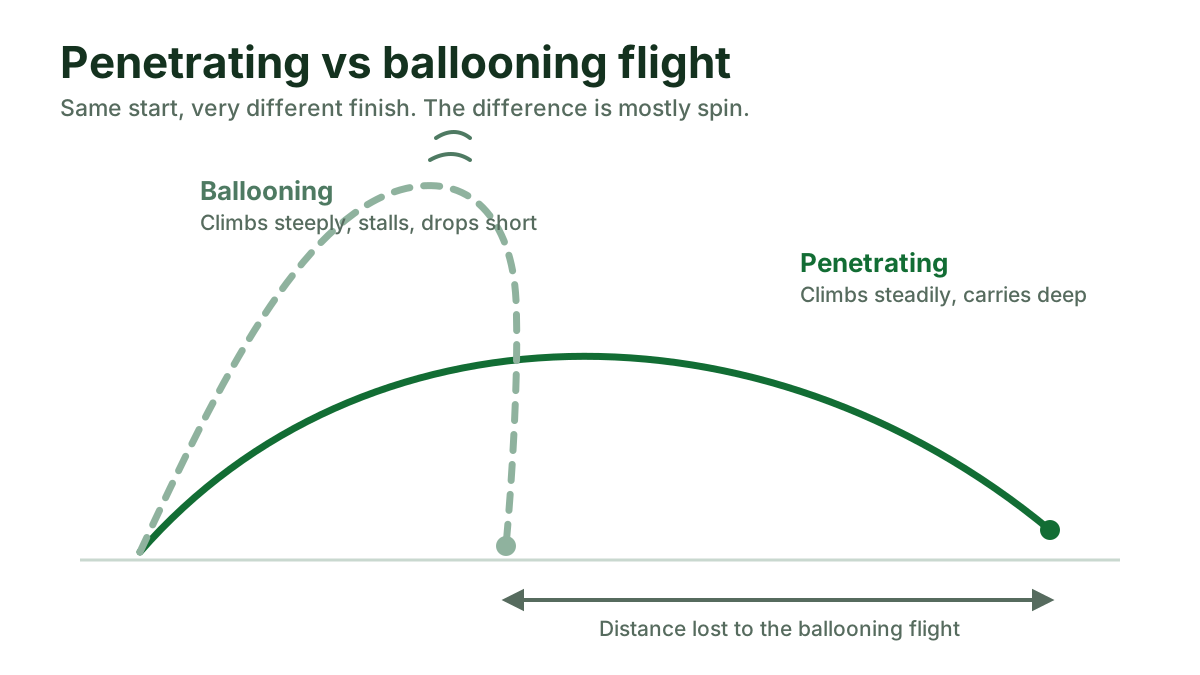
A ballooning golf shot climbs steeply, seems to hang in the air, then stalls and drops almost vertically — well short of where its early flight promised. The usual culprit is too much backspin, often teamed with too much launch: spin generates the lift that keeps a ball airborne, and past a point the ball spends its energy climbing instead of travelling. Into any breeze, the effect multiplies and the shot falls embarrassingly short.
Ballooning frustrates golfers precisely because the strike often feels good — the ball takes off fast and high, then betrays you. This guide covers how to recognize a genuine balloon (as opposed to a normal high flight), the swing and equipment causes behind excess spin, why wind makes everything worse, and how launch monitor numbers turn the diagnosis from guesswork into arithmetic.
- Ballooning = steep climb, stall, near-vertical drop, short carry.
- Excess backspin — often with excess launch — is the usual cause.
- Steep, glancing strikes add spin; so can very soft, high-spin balls.
- Headwinds magnify spin's lifting effect dramatically.
- Spin rate and launch angle on a launch monitor confirm the diagnosis.
What does a ballooning shot look like?
Watch the second half of the flight. A healthy high shot rises, peaks and descends on a fairly symmetric arc, still travelling forward as it lands. A balloon rises too eagerly, seems to pause at the top as if it hit a ceiling, then falls steeply with little forward motion — often visibly pushed backward-looking in a breeze. The tell on the ground: your carry distances shrink while your peak height stays impressive, and playing partners say it looked great in the air. High is not the problem; high without forward is.
What causes ballooning?
Backspin creates aerodynamic lift, and too much lift converts distance into altitude. The extra spin usually comes from the delivery: a steep, downward, glancing blow — common when golfers hit at the ball rather than through it — increases spin loft, the gap between where the face points and where the club is moving, and spin rises with it. Excess spin rate plus a high launch angle is the classic balloon recipe. A sharply negative attack angle with the driver is a frequent specific culprit, because the driver is the club least able to afford the spin.
Is your equipment making it worse?
It can contribute, though the swing usually leads. Commonly reported equipment factors: a shaft much too soft for your speed can add height and spin you did not order; very high-spin, soft-cover balls amplify a spin problem you already have; and drivers with high-spin heads or too much loft for your delivery stack the deck further. Treat equipment as the second suspect — if your launch monitor numbers show excess spin across several clubs and deliveries, a club fitting can tell you how much of it the gear owns.
How does wind exaggerate ballooning?
A headwind increases the airspeed over the ball, and lift scales with airspeed — so the same spin produces far more climb into the wind than in still air. That is why a shot that merely flies high on a calm day turns into a full balloon the moment you face a breeze, and why experienced players club up and swing easier into wind: a smoother swing produces less spin, which matters more than the extra club. The old saying — swing with ease into the breeze — is aerodynamics, not folklore.
How do you fix ballooning with launch monitor data?
Get measured first: a bay session showing your spin rate, launch angle and attack angle tells you whether you genuinely balloon or just hit it high — and which ingredient is oversupplied. Then work the usual levers: shallow the strike (sweep more, chop less), move ball position and strike location toward the centre of the face, and swing smoother into wind. Re-measure as you change things so progress is visible. Our guide to using simulator data to fix your swing walks the method, and you can find a simulator near you to start.
Suspect you are ballooning? Find an indoor golf simulator near you to see your spin numbers, read up on spin rate, or dive into using simulator data to fix your swing.