What Degree Is a Gap Wedge?
What degree is a gap wedge? Most gap wedges are 50 to 52 degrees of loft — the gap between your pitching wedge and sand wedge. Here is how to set yours.

What degree is a gap wedge? A gap wedge is typically 50 to 52 degrees of loft, sitting right between your pitching wedge and your sand wedge. As the name suggests, it fills the distance gap that opened up as pitching wedges were made stronger (lower-lofted) over the years. You may also see it called an approach wedge or A-wedge. As always, the exact loft varies by manufacturer and set, so check the number stamped on your own club.
A gap wedge exists to keep your short-range distances evenly spaced, so you are not stuck swinging too hard with a sand wedge or too soft with a pitching wedge. This guide covers the typical gap wedge loft, how it fits with your other wedges, how to pick the right loft for your set, and how a golf simulator or launch monitor helps you confirm the real distance gaps.
- A gap wedge is usually 50 to 52 degrees of loft.
- It sits between the pitching wedge and the sand wedge.
- It is also called an approach wedge or A-wedge.
- Aim for even loft gaps of about 4 to 6 degrees between wedges.
- A launch monitor shows the real carry distances so you can spot uneven gaps.
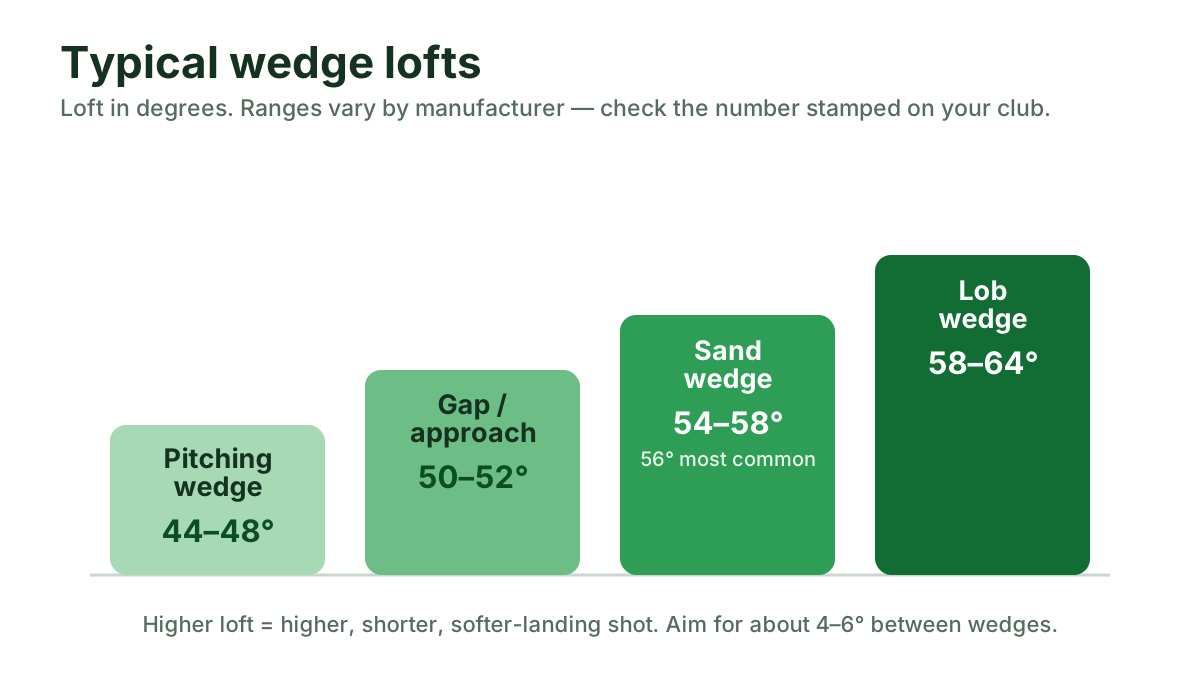
What is the typical loft of a gap wedge?
A gap wedge usually falls between 50 and 52 degrees, with both 50 and 52 common depending on the brand and the rest of your set. The idea is to split the difference between a pitching wedge (often around 44 to 48 degrees) and a sand wedge (often around 54 to 58), so no single distance is left uncovered. Because lofts are not standardized across manufacturers, the surest way to know yours is to read the number printed on the club.
Why is it called a gap wedge?
The name describes its purpose. Over the years, iron and pitching-wedge lofts were gradually strengthened to add distance, which opened up a yardage gap between the pitching wedge and the sand wedge. The gap wedge was added to fill that space. Some manufacturers brand the same club as an approach wedge, or simply stamp it with an A or a loft number instead of a name.
How do you choose the right gap wedge loft?
The goal is even spacing. Look at the loft of your pitching wedge and your sand wedge, then pick a gap wedge that sits roughly halfway between them, aiming for gaps of about 4 to 6 degrees from club to club. For example, a 46-degree pitching wedge and a 56-degree sand wedge leave a wide gap that a 50 or 52-degree gap wedge fills nicely. If your wedges are unevenly spaced, you will feel it as awkward in-between yardages on the course.
- Note the loft of your pitching wedge and sand wedge.
- Pick a gap wedge roughly halfway between them.
- Aim for about 4 to 6 degrees between each wedge.
- Re-check the gaps if you change any wedge in the set.
How does a gap wedge compare to other wedges?
In a typical set, the wedges run pitching, gap, sand, then lob, each with more loft than the last. The pitching wedge is usually around 44 to 48 degrees, the gap wedge around 50 to 52, the sand wedge around 54 to 58, and the lob wedge around 58 to 64. Each step up in loft gives a higher, shorter, softer-landing shot, which is why most players carry two or three of these to cover the scoring range.
- Pitching wedge — typically about 44 to 48 degrees.
- Gap / approach wedge — typically about 50 to 52 degrees.
- Sand wedge — typically about 54 to 58 degrees.
- Lob wedge — typically about 58 to 64 degrees.
How can a golf simulator help you set your wedge gaps?
Loft numbers suggest how your wedges should be spaced, but a golf simulator or launch monitor shows what actually happens. By hitting a handful of shots with each wedge indoors, you can see the real carry distance for each one and check that the gaps are genuinely even — not clustered or overlapping. If two wedges carry nearly the same distance, that is a sign your lofts need adjusting. Our metrics guide explains the numbers, and you can find a simulator near you to measure your own set.
If your measured carry distances reveal a missing gap, compare wedge options for mid-handicappers. Choose the required loft and bounce first, then check the exact available configuration rather than buying another wedge with overlapping carry.
Ready to check your yardages? Find an indoor golf simulator near you, see what a launch monitor measures, or read what degree is a sand wedge to complete the wedge picture.