How Accurate Are Simulator Distances vs. the Real Course?
Why your simulator yardages can differ from the course, and how to read the numbers so they still help your game.
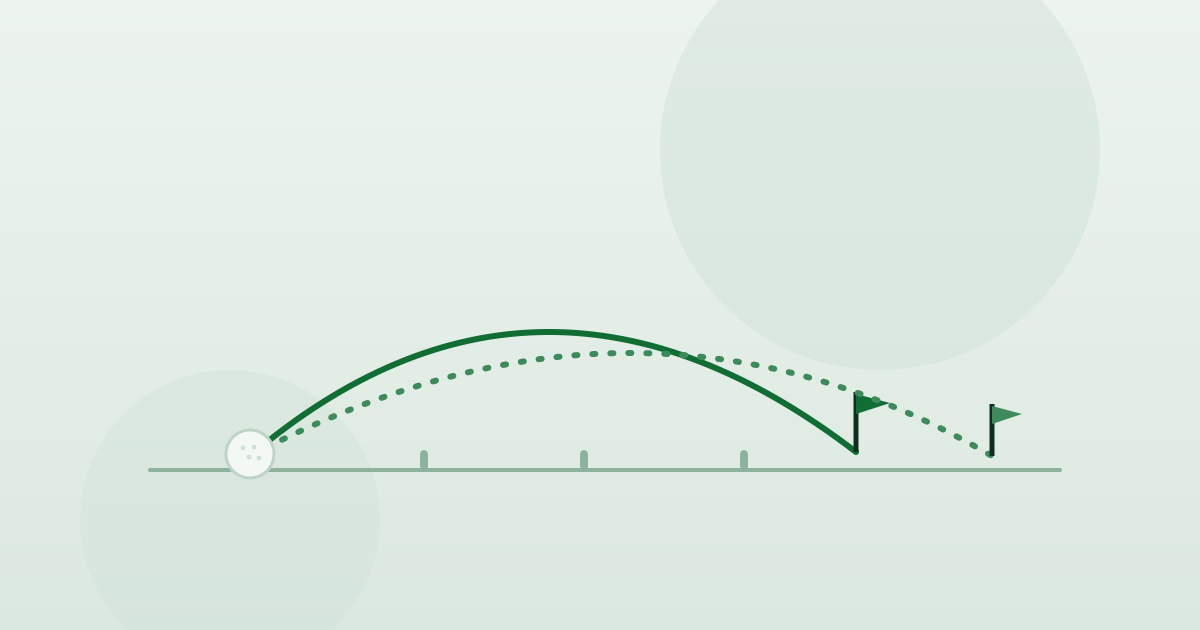
A well-set-up simulator gets your distances close to the real thing, but small differences are normal — and they usually come from the environment, not a broken sensor. Indoors there is no wind, the temperature is controlled, and the ball lands on a flat virtual surface, so the conditions that move a real shot around are simply not present.
Once you understand which numbers to trust and why the room changes a shot, simulator yardages become one of the most useful things you can take to the course. This guide walks through where indoor and outdoor numbers line up, where they drift apart, and how to turn the screen into a yardage chart you can actually rely on.
- Indoors removes wind, elevation, temperature swings and real turf, so shots look cleaner.
- Carry distance is the dependable number; total distance adds modelled bounce and roll.
- Use the simulator to learn the relative gaps between clubs, not one perfect yardage.
- Differences from your on-course numbers are usually conditions, not a faulty sensor.
- Compare numbers within one setup, since bays calibrate and play differently.
Why do my simulator yardages differ from the course?
Outdoors, wind, elevation, temperature, turf interaction and how the ball bounces and rolls all change where a shot ends up. A simulator models flight from your launch numbers, but it cannot reproduce every one of those variables exactly. So the carry it shows can be very close while total distance — which depends on bounce and roll — varies more from course to course. A cold morning, a soft fairway or a stiff breeze each nudges a real shot in ways the room never sees. None of that means the reading is wrong; it means the bay has stripped away the variables that usually push your ball around, leaving a cleaner version of the same swing.
Should I trust carry distance or total distance more?
Carry is the more dependable number to practise with, because it is driven directly by your strike: ball speed, launch angle and spin rate. Total distance adds an estimate of bounce and roll on top, and that estimate depends on conditions the room cannot know — firmness, slope, and the lie where the ball settles. If you are learning your gaps, lean on carry distance and treat total distance as a guide rather than gospel. Carry travels with you from the bay to the course; roll-out is the part you fine-tune once you can feel the turf under your feet.
Do simulators read distance too long or too short?
There is no single direction it leans — it depends on the system, the calibration and the conditions you are comparing against. A shot that carries a steady number indoors might run out further on a firm, downwind day and stop shorter on a cold, soft one. That is exactly why the absolute yardage matters less than consistency: if the same swing produces the same carry every time, you have a baseline you can adjust from once you step outside. Chasing one perfect figure is the wrong goal; a repeatable number you trust is far more valuable than a flattering one you cannot reproduce.
Why does the same club feel different indoors?
Beyond the missing weather, two setup details can shift how a shot reads: the hitting mat and how the launch monitor is calibrated. A mat behaves differently from real turf through impact, so a slightly heavy or thin strike that grass would punish can come off cleaner indoors. Each system also has its own way of measuring spin, which is a big driver of both height and distance. We cover this in more detail in why the ball flies differently on a simulator. The practical takeaway is to compare your numbers within one setup, not across two different bays, so the trend stays meaningful.
How does spin change the distance a simulator shows?
Spin quietly shapes how far a shot carries, not just how high it climbs. Too much backspin balloons a shot and steals distance; too little can knock it down before it reaches its potential. Because spin rate is one of the harder things for any sensor to pin down, a carry that surprises you is sometimes a spin reading rather than a swing change. This matters most with wedges and the longest clubs, where spin has the biggest say. If a distance looks off, glance at the spin number before you blame your contact — it often explains the gap on its own.
How do I make simulator distances useful on the course?
Use the simulator to learn your relative gaps rather than chasing one perfect yardage. Knowing each club carries a reliably different distance is what lowers scores, because it turns club selection into a decision instead of a guess. To pressure-test those gaps, try a club gapping session and play full virtual rounds so you rehearse real club choices under a little pressure. Our guide to practising effectively shows how to build a session around it. Treat the carry numbers as a ladder of gaps you can lean on, then let the conditions outside tell you when to club up or down.
How do I build a reliable yardage chart indoors?
Start with the clubs you hit most and gather a handful of solid strikes with each, ignoring the obvious mishits that would never count outdoors. Look at the typical carry rather than your single best swing, since the average is what you will actually reproduce on the course. Work down through the bag so the gaps between clubs stay even, and note any pair that overlaps — that is a fitting or a swing conversation for later. A club fitting session can tighten those gaps further. Revisit the chart now and then, because a yardage ladder is a living thing that shifts as your swing settles.
Should I compare numbers across different venues?
Be cautious here. Two bays running different technology, different mats and different calibration can report the same swing a little differently, so jumping between venues and comparing raw carries can mislead you. The honest approach is to treat each setup as its own reference and watch the trend inside it. If you do play several places, focus on the gaps between your clubs rather than the absolute figures, because the spacing tends to hold up even when the headline number shifts. Since this varies by venue, it is worth checking which system a place runs — browse venues shows the technology on each listing.
Treat the simulator as the place you build a trustworthy yardage chart, then let real-world conditions fine-tune it. When you want to practise in person, browse venues near you or find one on the map.