Why Does the Ball Fly Differently on a Simulator?
If your shots look different indoors than outside, here's what's really going on — from missing wind to how the launch monitor reads spin.
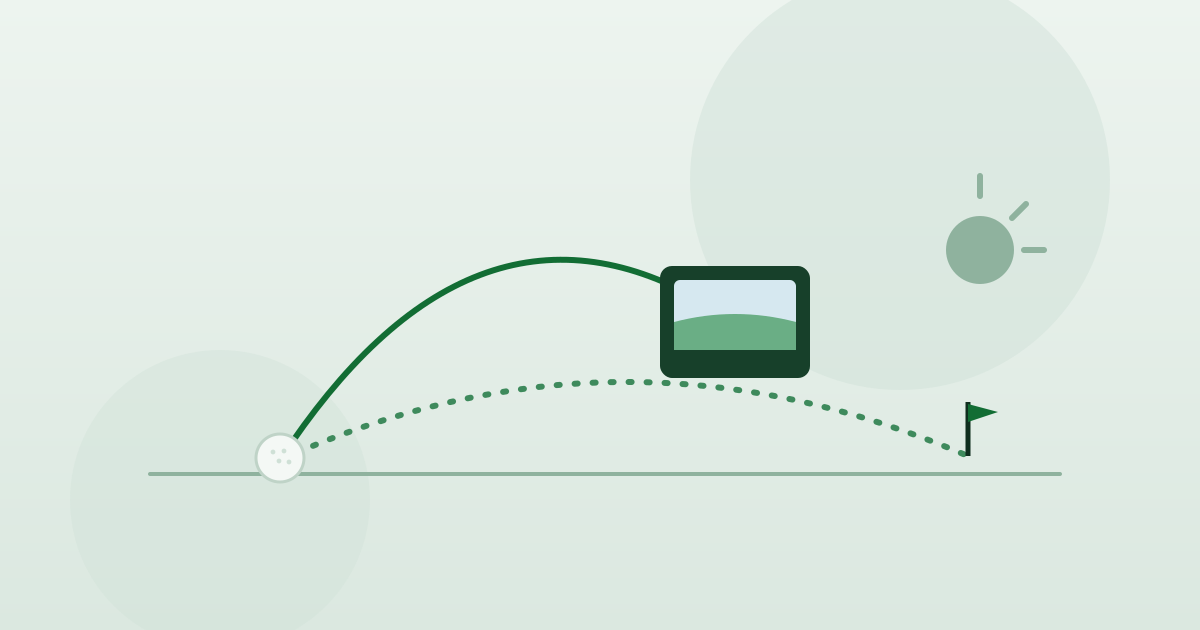
If a shot seems to fly differently on a simulator than it does outside, the most common reasons are the controlled indoor environment and how the launch monitor measures spin. The swing is the same — what changes is the conditions around the ball and how its flight is calculated.
That is reassuring once you understand it: a surprising ball flight indoors rarely means your swing fell apart. It usually means the room removed something the outdoors adds, or the sensor read spin a little differently. This guide walks through each cause so you can read the screen with confidence instead of second-guessing every shot.
- No wind, elevation or weather indoors, so shots often look cleaner and straighter.
- Spin drives height and curve, and it is the trickiest thing for a sensor to measure.
- The mat and the calibration are part of the reading, so numbers are specific to that bay.
- Different systems read spin in different ways, which is why bays can feel distinct.
- Compare shots within one setup; differences between two bays are expected.
Does the indoor environment change ball flight?
Yes, mainly by removing variables. There is no wind to curve or hold up a shot, no elevation change, and a steady temperature and humidity. Outdoors those forces are constantly nudging the ball; indoors they are gone, so a shot can look cleaner or straighter than the one you are used to seeing on a breezy course. A high ball that the wind would knock down outside keeps climbing on screen, and a gentle fade has nothing to push against. That is not the simulator flattering you — it is simply showing the shot without the weather that normally shapes it.
How does spin shape what I see on screen?
Spin is one of the biggest drivers of ball flight, and it is also one of the trickier things to measure. Spin rate controls how much a shot climbs and how quickly it stops, while spin axis tilts that spin to create draw or fade. Together they decide the height, the curve and the way a shot lands. Because spin has so much influence, even a small difference in how it is read can change the flight you see. So a curve or a height that surprises you is often the system reading spin slightly differently than you expect, not a sudden change in your swing.
Why does my ball flight look straighter indoors?
Two things tend to combine. First, there is no crosswind to exaggerate a fade or draw, so your natural shape looks tamer than it does on an open course. Second, if the system reads a touch less side spin than the wind would reveal outside, the curve flattens further. Neither is a problem on its own — but it is worth knowing, because a shot shape you rely on outdoors might be quietly hiding indoors. Checking the spin axis number tells you whether the curve is really gone or simply unexaggerated, so you do not arrive at the course expecting a shape that was only ever muted by the room.
Can the hitting mat change how the ball comes off?
It can, in subtle ways. A mat does not grab and resist the club the way real turf does, so a slightly fat or thin strike that grass would punish can slide through and come off cleaner indoors. That can make contact feel more forgiving than it would be on a tight lie outside. The mat can also influence how the club delivers loft at impact, which feeds into launch and spin. None of this means the reading is wrong — it means the surface is part of the shot. If a flight looks unusually clean, the mat may be doing you a quiet favour.
How does calibration affect the numbers?
Every launch monitor has to be set up and aligned, and that calibration becomes part of what it reports. A system that is positioned or tuned a little differently can read the same strike with slightly different numbers, which is one reason two bays rarely match exactly. This is not a flaw so much as a reminder that the reading is specific to that setup. Knowing which launch monitor a venue runs helps you interpret what you see, and you can browse venues to compare technologies. The honest habit is to treat each bay as its own reference rather than expecting it to mirror another.
Do different launch monitors read spin differently?
They do, and it is one of the main reasons systems can feel distinct. Some measure spin directly, watching marks on the ball, while others infer it from the rest of the strike. Both approaches work well, but they can land on slightly different spin numbers for the same shot, and since spin drives height and curve, that shows up in the flight on screen. Our guide to radar versus camera launch monitors explains the approaches in plain English. The takeaway is not that one is right and the other wrong, but that the method shapes what you see, so compare like with like.
Should I worry if my numbers look different from last time?
Only if they change within the same bay across one session. Differences between two venues, or between indoors and the course, are expected and explained by everything above. The reliable habit is to compare like with like: track your numbers within a single setup so the trends actually mean something. If the figures drift around in one sitting on the same system, that is worth a closer look at your contact or the setup; if they differ from another venue you played recently, that is simply the nature of different bays. For how indoor and outdoor yardages relate, see simulator distances vs. the real course.
How do I read indoor ball flight with confidence?
Start by expecting the room to clean things up, then use the numbers to confirm what your eyes see. If a shot looks straighter or higher than usual, glance at spin rate and spin axis before assuming your swing changed — they usually tell the real story. Keep your comparisons inside one setup, note your typical figures, and treat the absolute numbers as a baseline rather than a verdict. Played this way, indoor ball flight stops being confusing and becomes a steady source of feedback. The goal is not a perfect match with the course but a trend you can trust from session to session.
The takeaway: a different-looking ball flight indoors is usually the environment and the sensor, not your swing. Read the numbers in context and they stay genuinely useful. When you want to compare setups, find a venue near you.