What Degree Is a Lob Wedge?
What degree is a lob wedge? Most lob wedges are 58 to 64 degrees of loft, with 60 the most common. Here is when to carry one and how it fits your set.
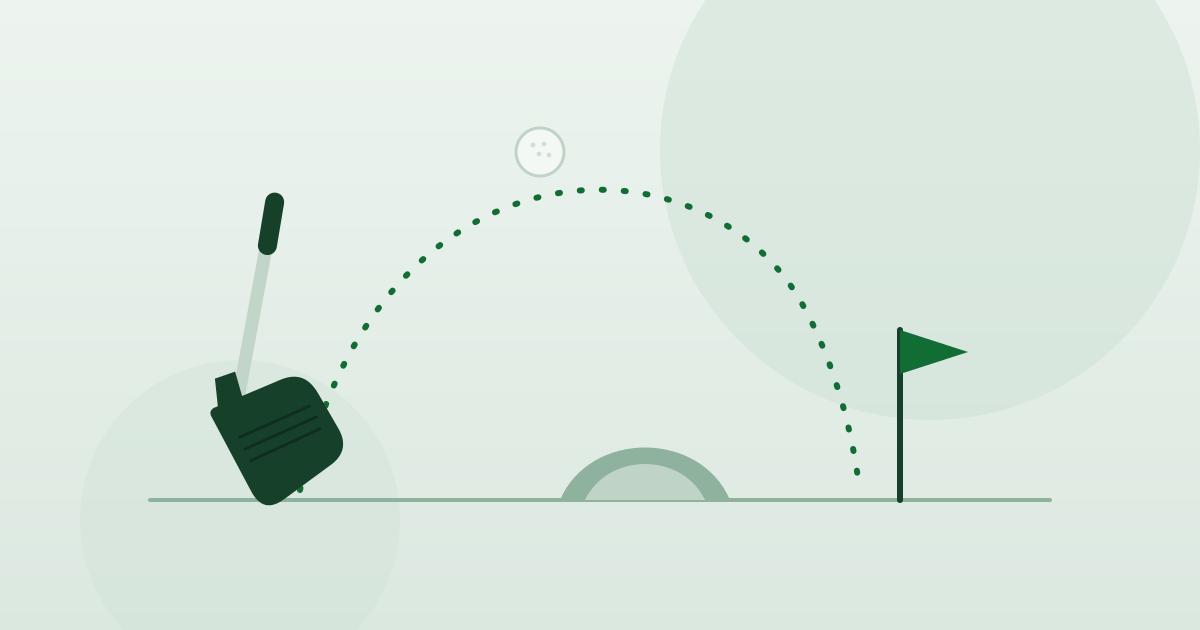
What degree is a lob wedge? A lob wedge is typically 58 to 64 degrees of loft, with 60 degrees by far the most common choice. It is the highest-lofted club most golfers will ever carry, built for short, steep shots that go up quickly and stop fast — flop shots over a bunker, tight-pin chips and greenside recoveries. As with every wedge, lofts are not standardized, so check the number stamped on your own club.
The lob wedge is also the most optional club in the wedge ladder: plenty of good golfers skip it entirely and play those shots with a sand wedge instead. This guide covers the typical lofts, whether you actually need one, how it fits alongside your other wedges, and how to test the difference for yourself on a simulator.
- A lob wedge is usually 58 to 64 degrees of loft; 60 degrees is the most common.
- It is the highest-lofted wedge — built for height and stopping power, not distance.
- It is optional: many players cover the same shots with a sand wedge.
- Keep roughly 4 to 6 degrees between your sand wedge and lob wedge.
- Full-swing lob wedge shots are a common source of uneven distance gaps.
What is the typical loft of a lob wedge?
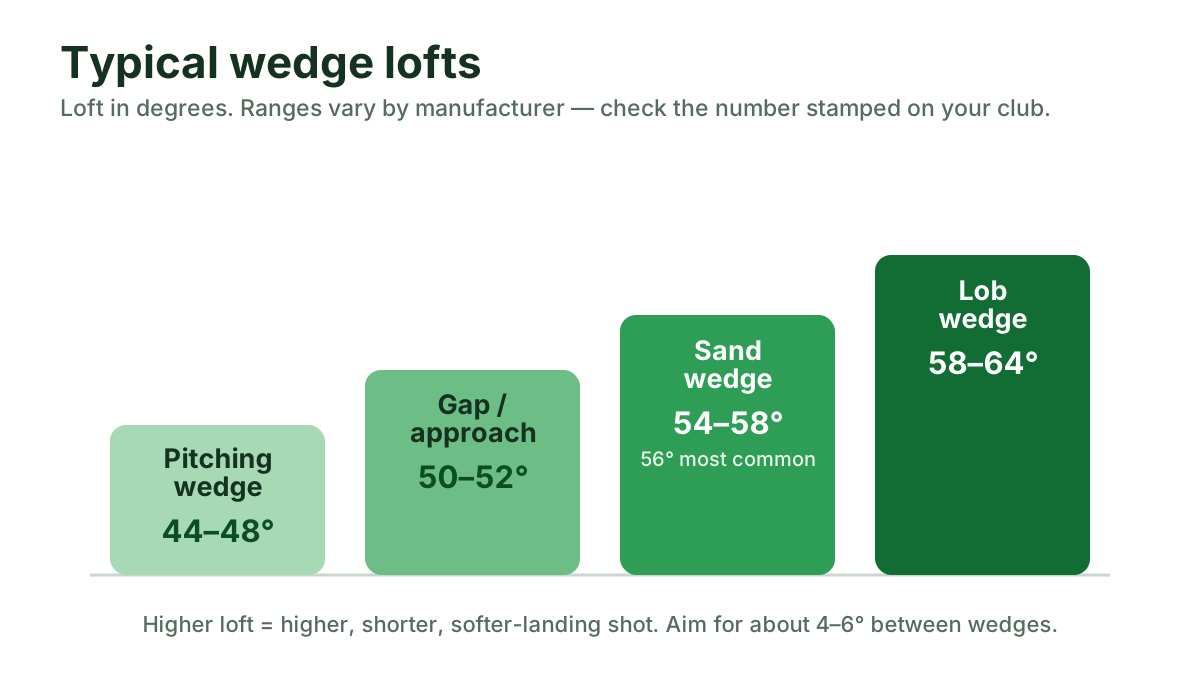
Most lob wedges sit between 58 and 64 degrees. Sixty degrees is the standard pick because it spaces cleanly above a 54- to 56-degree sand wedge, while 58 suits players whose sand wedge is on the weaker side. Lofts of 62 degrees and up exist but are specialist tools — the higher the loft, the smaller the effective hitting area and the less forgiving the club, which is why very high lofts are rare outside skilled short games.
Do you need a lob wedge?
Not necessarily. A lob wedge earns its spot when you regularly face short-sided chips, firm greens or shots that must clear something and stop quickly. If your course has generous green surrounds, or you prefer one familiar club for every greenside shot, a sand wedge with its face opened up covers most of the same ground. Beginners often do better mastering one wedge first: the lob wedge's extra loft magnifies mishits, and thin contact with 60 degrees of loft travels a long way past the pin.
How does a lob wedge fit with your other wedges?
The lob wedge caps the wedge ladder. Below it, a typical setup runs pitching wedge around 44 to 48 degrees, gap or approach wedge around 50 to 52, and sand wedge around 54 to 58. Keeping about 4 to 6 degrees between each wedge keeps the distance steps even. If you add a 60-degree lob wedge to a 56-degree sand wedge, you have a classic spacing; if your sand wedge is 58, a 62 may space better — or you may not need the extra club at all. Our club gapping guide shows how to check.
What bounce should a lob wedge have?
Lob wedges are commonly sold with lower bounce than sand wedges, because they are often played from tighter lies where the club needs to slide under the ball rather than skip off the turf. But the right bounce depends on your turf, your sand and how steeply you swing — a high-bounce lob wedge can be the better pick on soft ground. If bounce is new territory, our guide to what bounce means on a wedge explains the number and how to choose.
How can a simulator help you decide on a lob wedge?
A launch monitor answers the two questions that matter: how far your full-swing lob wedge actually carries, and whether it duplicates a shot you already have. Hit your sand wedge and lob wedge back to back and compare carry, height and spin — if the numbers barely differ, the extra club may not be earning its slot. Our metrics guide explains what to look at, and you can find a simulator near you to run the test.
Thinking about your wedge setup? Find an indoor golf simulator near you to test it, check the full golf club loft chart, or read what degree is a sand wedge next.