What Is a Fried Egg Lie in Golf?
A fried egg lie is a ball half-buried in its own crater in soft bunker sand. Here is why it happens and how to play the shot without heroics.
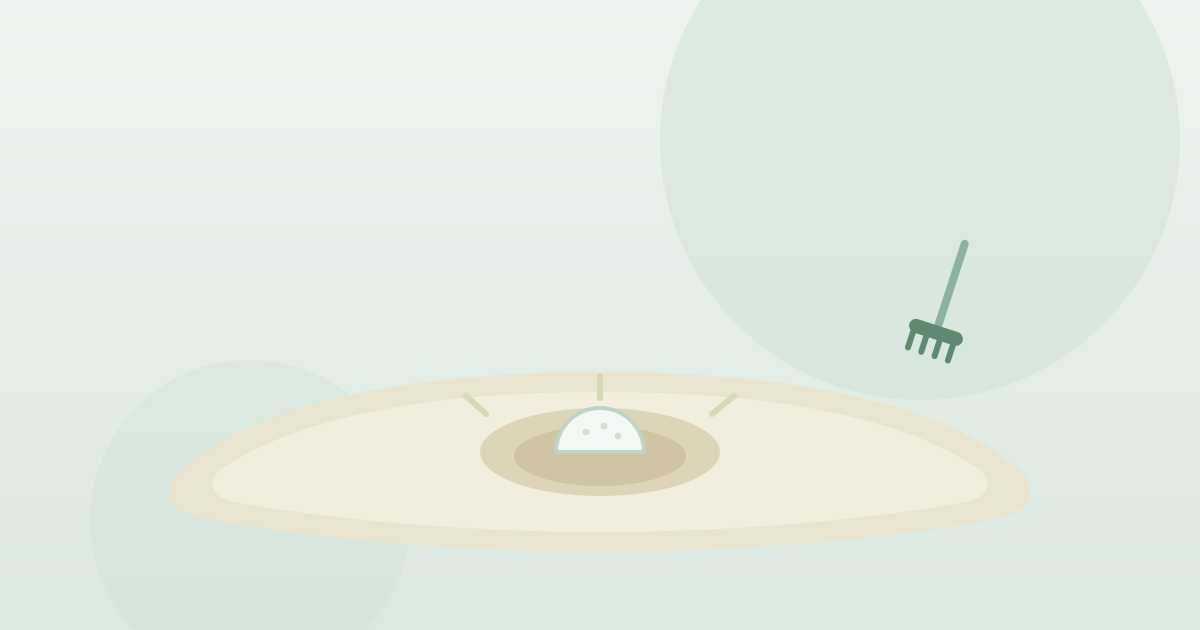
A fried egg lie is golf slang for a ball half-buried in the crater it made landing in soft bunker sand — the white ball sitting in its ring of displaced sand looks exactly like a fried egg. It is one of the game's most feared lies, and one of its most misplayed, because the technique that works from a normal bunker lie is precisely wrong for a plugged one.
The good news: a fried egg is more manageable than it looks once you accept what the shot can and cannot do. This guide explains what the lie is and why it happens, the technique change that gets the ball out reliably, what the ball will do after it lands (spoiler: run), and what the rules offer when the lie is truly hopeless.
- A fried egg is a ball semi-buried in its own landing crater in soft sand.
- Steep, high shots into fluffy, freshly-raked sand cause it.
- Play it with a square-ish face and a steep, digging strike — not an open-face splash.
- The ball comes out with almost no spin and runs, so plan for rollout.
- There is no free relief for a plugged ball in a bunker — only penalty options.
What is a fried egg lie?
It is a specific kind of plugged (or buried) lie: the ball descends steeply into soft sand, digs its own crater and stays sitting in it, partly below the surface, with a lip of displaced sand around it. The fried egg name comes from the picture — ball as yolk, crater ring as white. It differs from a fully buried ball, where only a sliver of the ball shows, and from a normal bunker lie, where the ball rests on top of the sand. Each demands a different response, which is why identifying the lie honestly is step one of playing it.
Why does a fried egg happen?
It takes two ingredients: soft sand and a steep landing. High, spinny approach shots that drop nearly vertically into a bunker bury themselves easily, especially in fluffy, freshly-raked or rain-softened sand. Firm, compacted sand rarely produces one — the ball bounces or settles on top instead. That is also why fried eggs feel so unjust: they punish good-looking, high shots that missed by a yard. Some bunkers are simply built with deep, soft sand where plugging is part of the hazard's teeth; links courses with firmer sand hand them out far less often.
How do you play a fried egg lie?
Forget the delicate open-face splash — with sand holding the ball down, you need to dig, not skim. The widely taught method: square the clubface (some players even close it slightly), play the ball around the middle of a stable, dug-in stance, and swing steeply, striking the sand just behind the crater's rim with committed force. The club excavates the ball out on a cushion of sand. Accept a modest target: getting out and somewhere on the green is success. Trying to fly a fried egg close to a tight pin is how one bunker shot becomes three.
What will the ball do after it comes out?
Run — plan on it. A ball excavated from a plugged lie leaves with heavy sand contact and almost no backspin, so it lands dead and rolls out much farther than your normal bunker shot. Good players use that: they land the ball well short of the flag and let the rollout do the travelling, or deliberately play away from short-sided pins toward the fat of the green. The classic error is landing it at the flag and watching it release off the back. With no spin available, the ground game is the only game.
What are your options under the rules?
Know the boundary: the free embedded-ball relief many golfers half-remember applies in the general area, not in bunkers — a plugged ball in sand is simply yours to deal with. If the lie is unplayable, the unplayable ball rule offers penalty options: for one stroke you can drop within the bunker (back-on-the-line or within two club-lengths), or go back to where you last played; for a total of two strokes you may take the line back outside the bunker entirely. Check the current Rules of Golf for specifics before a competition. Usually, though, the dig-it-out technique makes playing it the cheapest option.
Short game need work? Read how sims handle it in simulator putting and short game accuracy, learn what an up and down is, or find a practice venue near you.