What Is Offset in Golf Clubs?
Offset means the clubface sits slightly behind the hosel. Here is what offset does, why game-improvement irons have more, and who benefits from it.
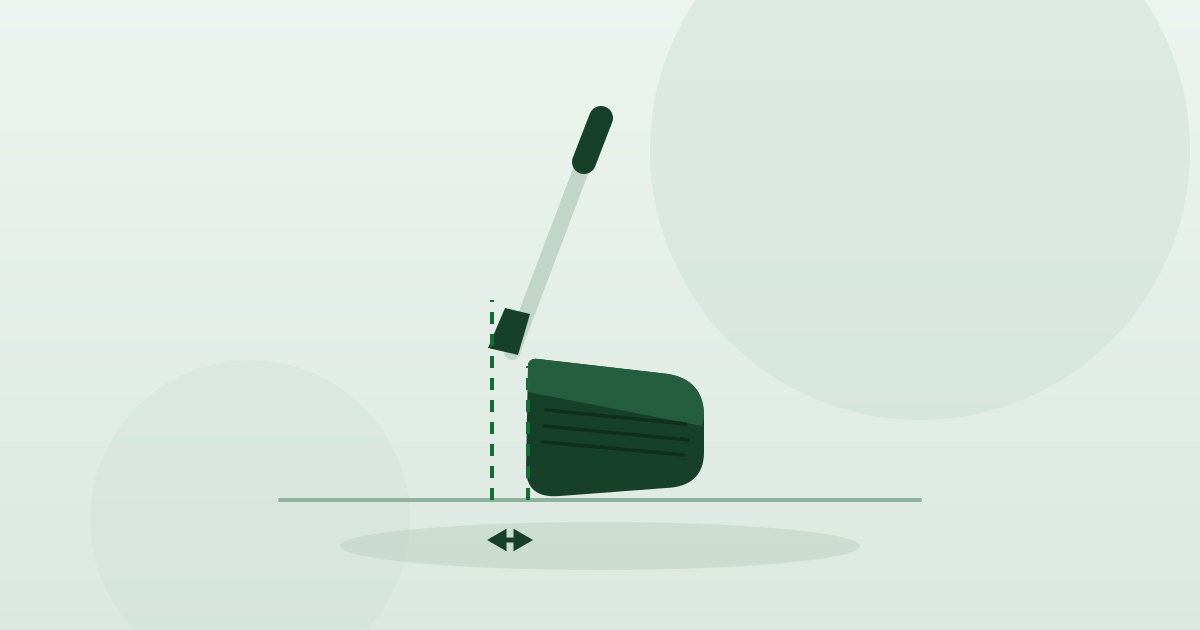
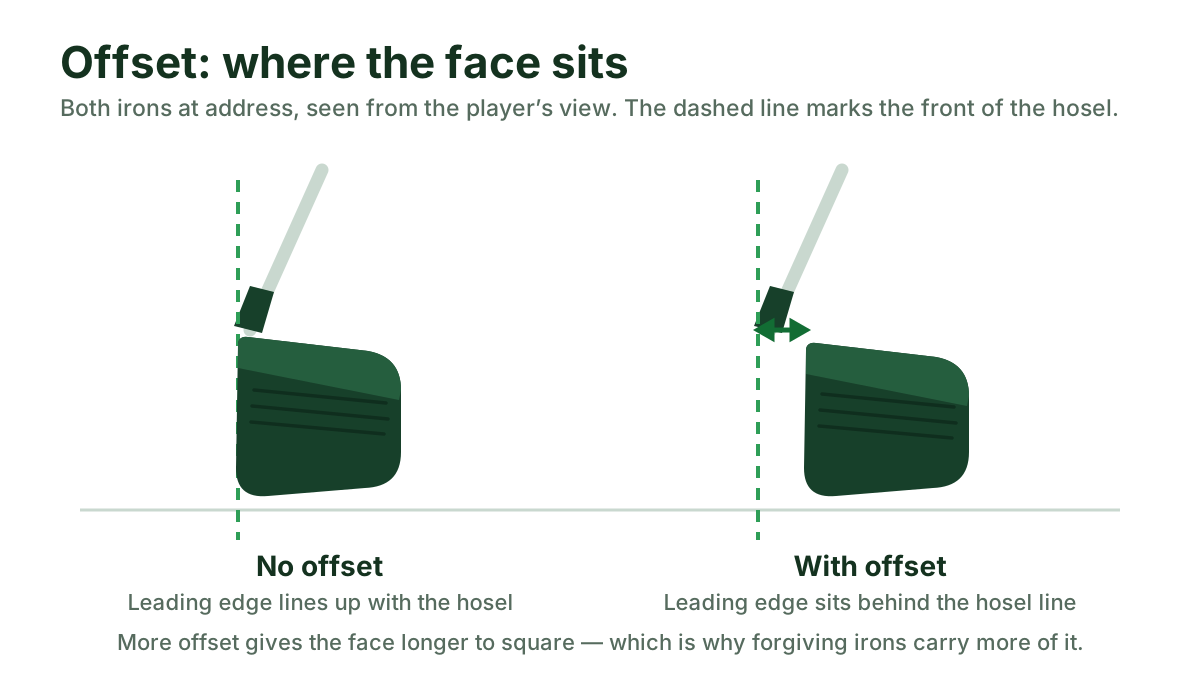
Offset is a design feature where the leading edge of the clubface sits slightly behind the front of the hosel — the neck that joins head to shaft. Looking down at an offset iron, the face appears set back a fraction from the shaft line. That small setback is deliberate: it is one of the oldest and most effective tools designers have for helping golfers who slice, which is why game-improvement clubs carry plenty of it and players clubs carry little or none.
Offset is easy to overlook because it hides in plain sight at address. This guide explains what offset is, what it does to your ball flight and why, who gains the most from it, the honest trade-offs that keep better players away from it, and how to test offset against non-offset heads with real numbers instead of impressions.
- Offset = the clubface's leading edge sits behind the hosel line.
- It gives the face a fraction more time to square before impact.
- It also shifts weight back, helping the ball launch higher.
- Game-improvement irons have the most offset; players irons the least.
- Slicers usually benefit; golfers who fight hooks usually should avoid it.
What is offset on a golf club?
Picture a straight line down the front of the hosel to the ground. On a zero-offset club, the face's leading edge meets that line. On an offset club, the edge sits behind it — usually by a few millimetres, more in super-forgiving designs, less as clubs get more players-oriented. Within a single iron set, offset typically shrinks as the clubs get shorter: long irons, which golfers struggle to square, get the most help, while wedges get little. Drivers and woods use the same idea under different names, with draw-biased heads effectively building in the equivalent.
What does offset do to ball flight?
Two things, as golfers commonly experience it. First, with the face set back, it reaches the ball a fraction later in the swing arc — a small extra window for your hands to square the face, which for slicers means impact happens with the face less open than it would otherwise be. Second, offset shifts the head's centre of gravity slightly rearward, which helps shots launch higher — welcome news for the same golfers, since a slicing ball flight is usually also a weak, low-carrying one. Neither effect rebuilds your swing; both nudge the odds toward straighter, higher shots.
Who should play offset clubs?
Golfers whose miss is to the open-face side — the slice for right-handers — and golfers who struggle to flight the ball high enough to hold greens. That describes a large share of beginners and improvers, which is why offset is standard equipment in the game-improvement category rather than an exotic option. If you are choosing your first proper set, there is no shame in taking the help: the game is more fun when the ball goes roughly where you aimed, and offset is one of the quiet features making that happen. Pair it with our guide on how to swing a golf club and the slice gets attacked from both ends.
Are there downsides to offset?
For its target golfer, few. The trade-offs appear as skills develop: a player who has learned to square or close the face can find offset turning straight shots into hooks — the help becomes a push in a direction you no longer need. Some better players also dislike the set-back look at address, and very generous offset can make deliberately shaping shots feel clumsy. None of this makes offset bad design; it makes it a prescription. The right amount depends on your current delivery, not your aspirations — and it is worth re-checking as your swing improves.
How can you test offset against non-offset clubs?
Hit both styles back to back on a launch monitor and let the numbers speak. Watch face angle to see whether the offset head genuinely arrives squarer for you, and watch start line and curvature across a dozen shots each to compare dispersions honestly. Impressions lie — one lucky draw with a new club feels like destiny — but twelve measured shots do not. A club fitting runs exactly this comparison with a trained eye attached, and you can find a simulator near you to experiment on your own first.
Want to see your face angle in numbers? Find an indoor golf simulator near you, read about the face angle metric, or fix the root cause with how to swing a golf club.