How Much Space Do You Need for a Home Golf Simulator?
Room dimensions, ceiling height and swing clearance for a home golf simulator — and why visiting a venue is the easy alternative.
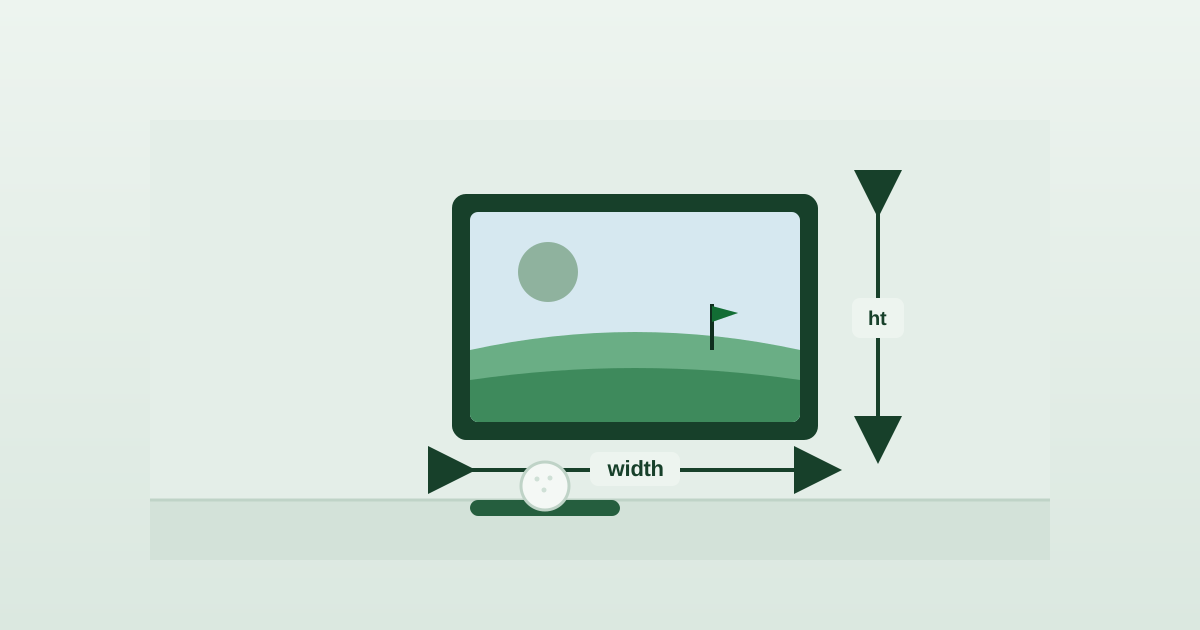
The single most common reason a home golf simulator feels cramped is not floor area — it is ceiling height. Before you measure anything else, stand where you would hit and make a slow full swing with your driver; if the clubhead clips the ceiling, that room will not work for full shots no matter how long or wide it is. Get the height right first and the rest of the planning tends to fall into place.
Space planning is where most home builds quietly succeed or fail, so it pays to understand the real requirements before you spend anything. This guide covers the dimensions that matter, the details people most often overlook, and why trying a bay at a venue first is the lowest-risk way to learn what you actually want. If you are still weighing the whole idea, our home setup vs going to a venue comparison lays out the trade-offs side by side.
- Ceiling height is usually the deciding factor — check it before anything else.
- You need width to swing freely and depth for the ball to travel safely to the screen.
- Exact space depends on your height, your swing and the specific launch monitor.
- Sensor type matters: radar units generally want more room than camera-based ones.
- Trying a bay at a venue first tells you more than any spec sheet.
What room dimensions does a home golf simulator need?
Think in three directions: height, width and depth. You need enough overhead room for your tallest player to swing a driver freely with margin to spare, enough width to make a full swing without a wall crowding either side, and enough depth for the ball to travel safely to the screen with standing room behind it. A level, stable floor ties it all together so the mat and any sensor sit true. Because every player and swing is different, treat these as directions to measure rather than fixed targets, and always confirm against the requirements for your chosen system.
- Ceiling height: room for your tallest player to swing a driver overhead, with margin.
- Width: space to swing freely without a wall on either side, plus room for a spectator.
- Depth: distance for the ball to reach the screen safely, plus standing room behind.
- Level flooring: a stable, even base so the mat and sensor sit true.
Why does ceiling height matter most?
Width and depth problems can usually be worked around with careful positioning, but a low ceiling cannot be negotiated. If you cannot complete a full driver swing without flinching at the ceiling, you are limited to partial swings or shorter clubs, which defeats the purpose of a home bay for most golfers. That is exactly why the slow-swing test comes first — it is a free, pass-or-fail check you can do today before committing to anything. Taller players and those with a steep, upright swing need more clearance than average, so measure with your real driver and your real motion rather than an optimistic guess.
How does the launch monitor type change the space you need?
The sensor technology has a real effect on room layout. Radar-based units generally want more distance between you and the screen so they can track the ball through enough of its flight, which favours a longer room. Camera-based units that sit overhead or beside the ball can often work in a shorter space, since they capture the strike up close rather than watching the full flight. Neither is automatically better; they simply suit different rooms. Always check the manufacturer's stated space requirements for the exact model, and if you are unsure which fits a smaller room, our radar vs camera guide explains the difference in plain terms.
What else do people forget when planning a home setup?
The launch monitor and screen get all the attention, but the details around them decide whether a bay gets used daily or gathers dust. Flooring, projector placement, ventilation, lighting and safe margins are easy to overlook when you are focused on the headline gear, yet each one can quietly ruin the experience if you get it wrong. None of these are exotic or costly to plan for — they just need to be on your list from the start rather than discovered after the build is finished. A few minutes of forethought here saves a lot of regret later.
- Flooring that absorbs impact and sits level with the hitting mat.
- A projector throw that avoids casting your own shadow on the screen.
- Ventilation — an enclosed bay warms up fast once you are swinging hard.
- Lighting that does not wash out the screen or confuse the sensor.
- Safe margins around the hitting area so a mishit cannot reach a wall or window.
Can you fit a simulator in a garage or basement?
Garages and basements are the two most popular homes for a simulator, and both can work beautifully — with caveats. Garages often have the depth and width but sometimes lack overhead room once you account for doors and rafters, so check the height under the lowest obstruction rather than the peak. Basements frequently have the opposite problem: plenty of length but a ceiling that only just clears a full swing, if that. In either space, plan for temperature and damp too, since an unconditioned room can get uncomfortable or harm electronics. Measure the worst point in the room, not the best, and you will avoid the most common disappointment.
Do you need a full enclosure, or can you use a net?
Both approaches work, and the right one depends on your space, budget and how immersive you want the experience to feel. A full enclosure with an impact screen lets you see your shot rendered on a virtual hole, which is the closest thing to playing indoors and the reason most people build a bay at all. A net paired with a launch monitor is more compact and forgiving of a tight room, giving you data and practice without the projected course. If realism and playing rounds matter most, plan for the screen; if space or budget is tight, a net is a sensible starting point you can build on later.
Is a home simulator worth it, or should you visit a venue first?
If you have the space, the budget and the desire to practise often without leaving the house, a home setup is hard to beat for sheer convenience. But it is a genuine commitment, and many players find a nearby venue gives them better technology, more course options and a social atmosphere with none of the build hassle. The lowest-risk move is to try a few venues before you commit, so you learn what you actually want from time in a bay. Trying setups first costs little and tells you exactly what to prioritise at home — browse venues near you to test-drive a few before you decide.
When you are ready to compare options, open the map, explore the technology behind each system, or browse venues near you to try a bay before you build.