Best Golf Shoes for Wide Feet
The best golf shoes for wide feet come in true wide sizings, not just bigger sizes. Here is what to look for in fit and style, and how to test them.
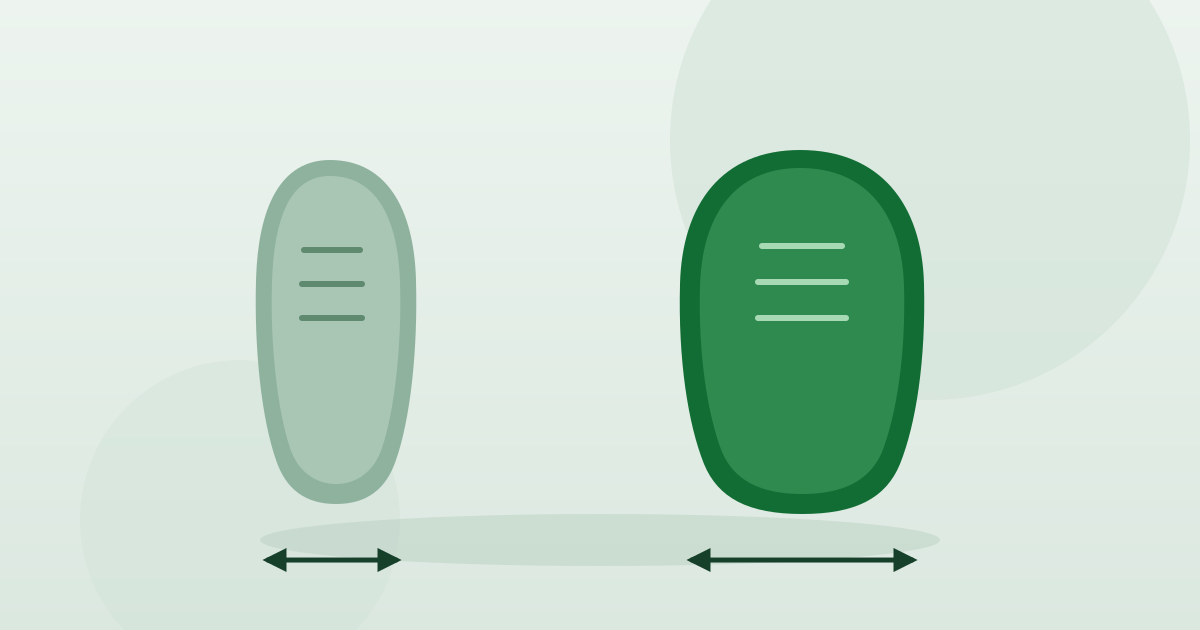
The best golf shoes for wide feet are the ones offered in genuine wide width sizings — commonly labelled W, 2E or 4E — rather than a standard shoe bought half a size long. Length and width are different measurements: sizing up adds room in front of your toes but barely any across the forefoot, where wide feet actually need it, and the extra length lets your foot slide during the swing.
Golf is a game played from the ground up, and a foot that is pinched or swimming inside a shoe undermines balance on every swing. This guide covers what makes a golf shoe genuinely wide, how the spiked versus spikeless choice interacts with foot shape, how a golf shoe should actually fit, the classic buying mistakes, and what works on the mats of an indoor venue.
- True wide sizings (W, 2E, 4E) add width across the forefoot; sizing up only adds length.
- Not every model comes in wide — filter by width first, style second.
- Spikeless designs are often more flexible and forgiving for wide feet.
- Fit check: firm heel hold, a thumb of toe room, no forefoot squeeze in a golf stance.
- Try shoes on with golf socks, later in the day when feet are largest.
What makes a golf shoe genuinely wide?
A wide-specific last — the foot-shaped form the shoe is built around — with real extra volume across the forefoot and toe box. Manufacturers that take widths seriously offer the same model in multiple width fittings, so you can keep your normal length and gain room only where you need it. Beware the phrase runs wide as a substitute for actual width sizings: it sometimes just means a sloppy fit. The practical filter when shopping is simple — start from the shortlist of models available in 2E or wider, then choose looks and features from there.
Are spiked or spikeless shoes better for wide feet?
Both come in wide fittings, so foot shape does not force the choice — but spikeless designs are often the friendlier starting point. Their flatter, more flexible soles let a broad foot spread naturally, and their uppers tend to be built more like athletic trainers, which forgives width better than stiff traditional saddles. Spiked shoes still earn their place in wet, hilly, outdoor golf, where maximum traction matters. If your golf is mostly indoors, spikeless wins by default: clean, flat-soled shoes are the norm at simulator venues, and metal spikes are unwelcome on mats and turf floors.
How should a golf shoe fit?
Three checks. The heel should be held firmly, with no lift when you walk. There should be roughly a thumb's width of space beyond your longest toe. And across the forefoot — the wide-foot pain point — the shoe should feel snug but never squeezed: you should be able to splay your toes slightly. Then add the golf test: set up a stance and rotate through an imitation swing. Your foot should not roll over the edge of the sole or slide inside the shoe. A shoe that passes standing still but fails in a golf stance is the wrong shoe.
What mistakes do wide-footed golfers make when buying?
The classic one is buying a half size or full size longer instead of a wide fitting, trading a forefoot pinch for heel slip and toe bruising. Others: trying shoes in thin everyday socks rather than golf socks; shopping in the morning, when feet are at their smallest, rather than later in the day; assuming laces cannot fix a marginal fit, when lacing patterns genuinely change forefoot pressure; and retiring a comfortable model instead of buying a second pair when it is discontinued. Wide-footed golfers who find a last that fits should treat it like a rangefinder that works — keep it.
What shoes work for indoor golf?
Indoor venues are the easiest case for wide feet, because the requirement is simply clean, flat-soled, non-marking shoes — trainers included at most venues. That opens the entire wide-fitting sneaker world, not just golf-specific models, though a spikeless golf shoe in wide gives the most stable base on a hitting mat. Metal spikes are a near-universal no. Policies vary by venue, so check before you go; our guide to what to wear and bring to indoor golf covers the full checklist, and you can find a venue near you to put a new pair through a bay session.
Kitting up? See what to wear and bring to indoor golf, browse our take on golf apparel brands, or find an indoor venue near you to break the new pair in.