Best Golf Grips for Sweaty Hands
Looking for the best golf grips for sweaty hands? Corded and all-weather grips hold traction when hands get damp. Here is how to choose and care for them.
Looking for the best golf grips for sweaty hands? The honest answer is that no single grip is best for everyone, but the ones that hold up in sweat and humidity share a few clear traits: a corded or textured surface, a tacky rubber compound, and a size that fits your hand so you are not squeezing. This guide explains what to look for, the main grip types built for moisture, and the simple habits — gloves, towels and regular regripping — that keep any grip from turning slick.
Sweaty or humid-weather hands turn a smooth, worn grip into something like a bar of soap, which quietly wrecks your swing because you grip tighter to compensate. The fix is part equipment and part maintenance. Below we cover the grip features that shed moisture, the grip categories designed for wet conditions, how a glove and a towel help, and when it is time to regrip.
- Corded and firmer-textured grips keep traction when hands are damp.
- A tacky rubber compound helps, but the tack fades as a grip wears.
- Grip size matters — too small makes you squeeze and sweat more.
- A dry towel and a well-fitted glove do as much as the grip itself.
- Grips are wear items; replacing worn ones restores lost traction.
What makes a golf grip good for sweaty hands?
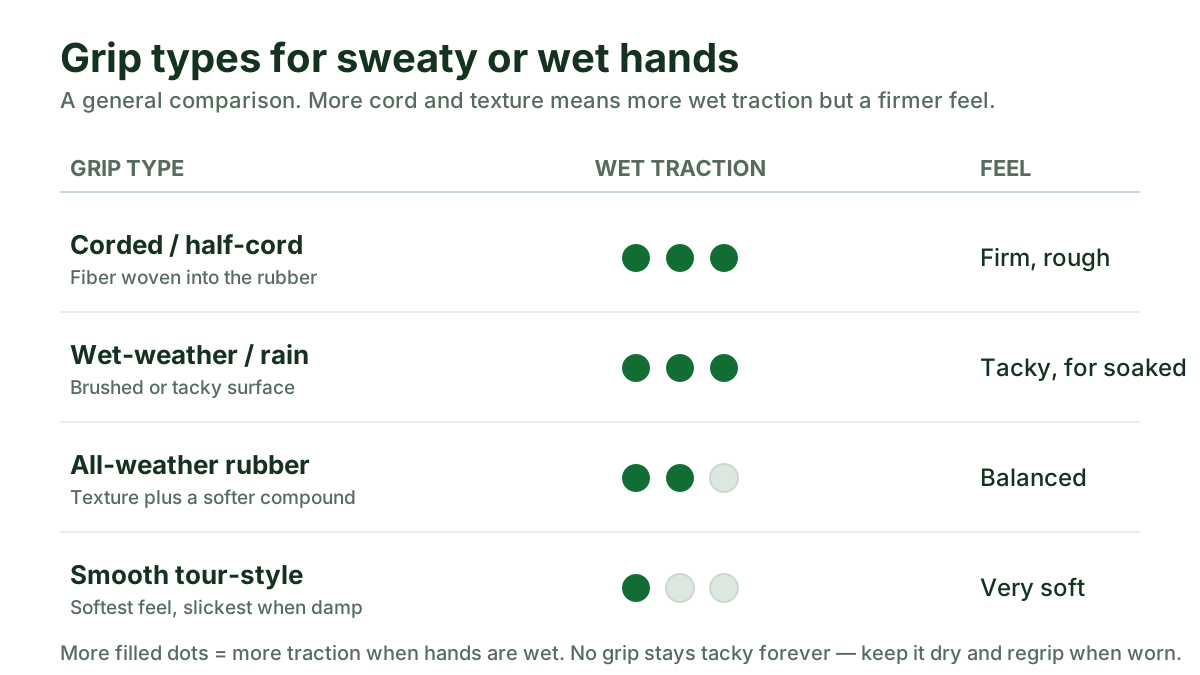
Two things: texture and material. A grip with cord — fibers woven into the rubber — gives a rougher surface that bites into your skin or glove even when wet, which is why cord is the classic choice for sweaty hands and humid climates. Softer, smoother grips feel great in dry conditions but get slick faster once moisture is involved. Beyond texture, a tacky rubber compound adds hold, though that tack wears down over time, so a grip that feels amazing when new can feel slick after a season of heavy use.
What types of golf grips work best in wet or humid conditions?
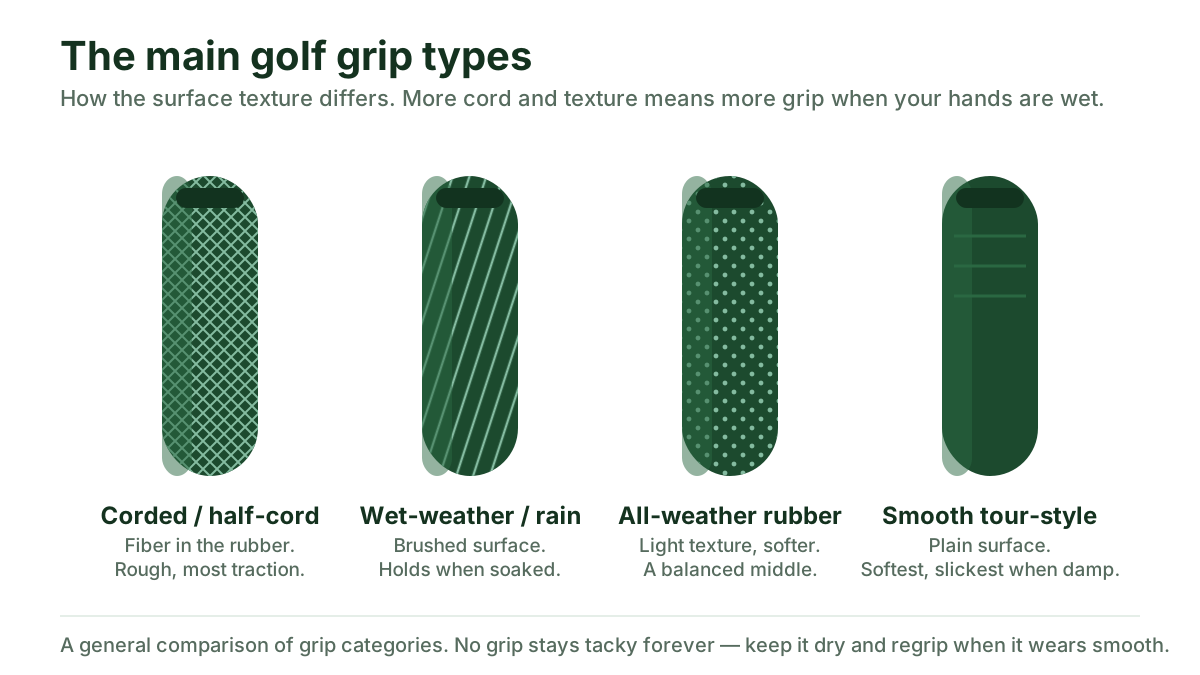
Most grips fall into a few broad categories, and some are built specifically for moisture. Corded or half-cord grips add fiber for traction in sweat and rain. All-weather rubber grips use textures and softer compounds to stay usable across conditions. Dedicated wet-weather or rain grips use a brushed or tacky surface designed to grip when soaked. There is a trade-off: more cord and texture means more traction but a firmer, sometimes rougher feel, so it is worth trying a few before you regrip a full set.
- Corded / half-cord grips — most traction in sweat and rain, firmer feel.
- All-weather rubber grips — a middle ground of texture and comfort.
- Wet-weather / rain grips — designed to hold up when fully soaked.
- Smooth tour-style grips — softest feel but slickest once damp.
Does grip size affect sweaty hands?
Yes, more than most players expect. A grip that is too small encourages a tighter, faster hold, which adds tension and, ironically, more sweat. A grip sized correctly for your hand lets you hold on with lighter pressure, so you rely less on brute squeezing to keep control. Grip size is set by the grip model and by the number of tape wraps underneath, and a fitter can measure your hand and recommend a size — the same kind of club fitting that dials in the rest of your clubs.
How do you keep golf grips from getting slick?
Even the best grip needs help staying dry, and the simplest habits make the biggest difference. Carry a dry towel and wipe your grips and hands between shots, keep a spare towel in the bag for humid days, and consider a rain or all-weather glove that is made to grip better when damp. Some players keep two gloves and rotate them so one dries while the other is in play. Washing grips occasionally with mild soap and water also revives tack by removing built-up oil and dirt.
- Wipe hands and grips with a dry towel between shots.
- Use an all-weather or rain glove in humid conditions.
- Rotate two gloves so one can dry out.
- Wash grips with mild soap and water to revive tack.
- Store clubs somewhere dry, not a hot, damp car trunk.
When should you replace your golf grips?
Grips are wear items, and a worn grip is a common hidden cause of slipping in sweaty hands. Signs it is time to regrip include a shiny, hardened surface, visible cracks, or a grip that feels slick even when clean and dry. A common rule of thumb is to regrip roughly once a year or every 40 or so rounds, but that depends heavily on how often you play, the climate, and whether you wear a glove. If your hands sweat a lot, err on the side of regripping sooner, since fresh grips restore the traction that moisture steals.
How can practicing indoors help you test your grip?
An indoor golf simulator is a controlled place to feel whether a grip works for you before you commit to regripping a whole set. In a climate-controlled bay you can hit shot after shot and notice whether the club twists or slips at impact, and a launch monitor will flag the erratic face angles that a slipping grip produces. It also lets you practice a lighter grip pressure — often the real fix for sweaty-hand slipping — without the added moisture of a hot, humid course. Our metrics guide explains what to watch, and you can find a simulator near you to try it.
Want to put a new grip to the test? Find an indoor golf simulator near you, see what a launch monitor measures, or read how to swing a golf club to build the technique that lighter grip pressure supports.